Adult heavyweight blue belt · Gi
The competitive journey
Pressure reveals
the work.
Competition has never been separate from Thiago's teaching. It is where preparation becomes honest, decisions become immediate, and every lesson is tested before it is brought back to the academy.
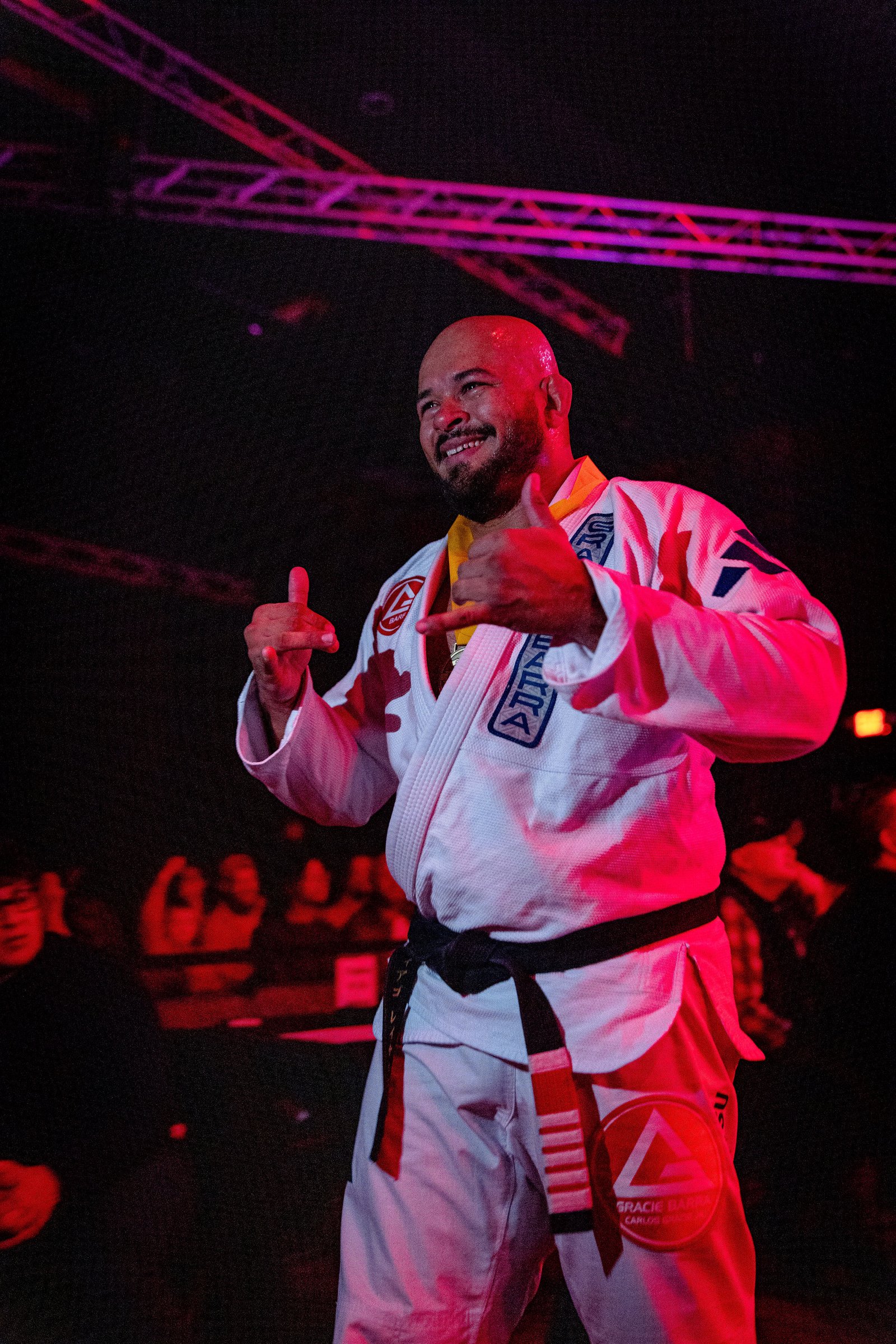
Copa Elite · Victory
Brazilian NationalTwo-time black belt champion
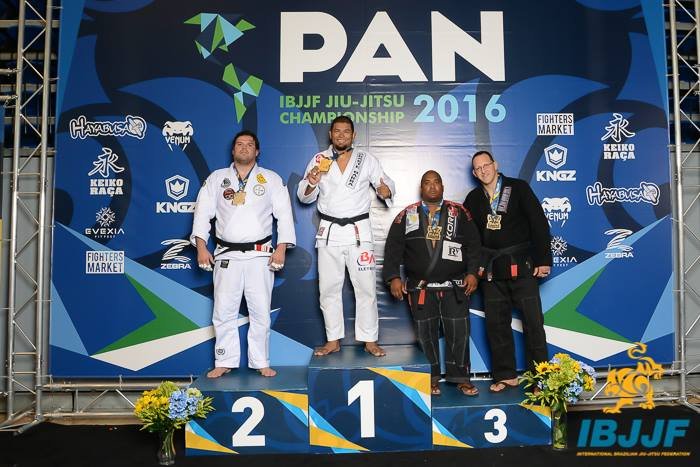
Pan AmericanDivision and open class champion
World MasterThree-time black belt medalist
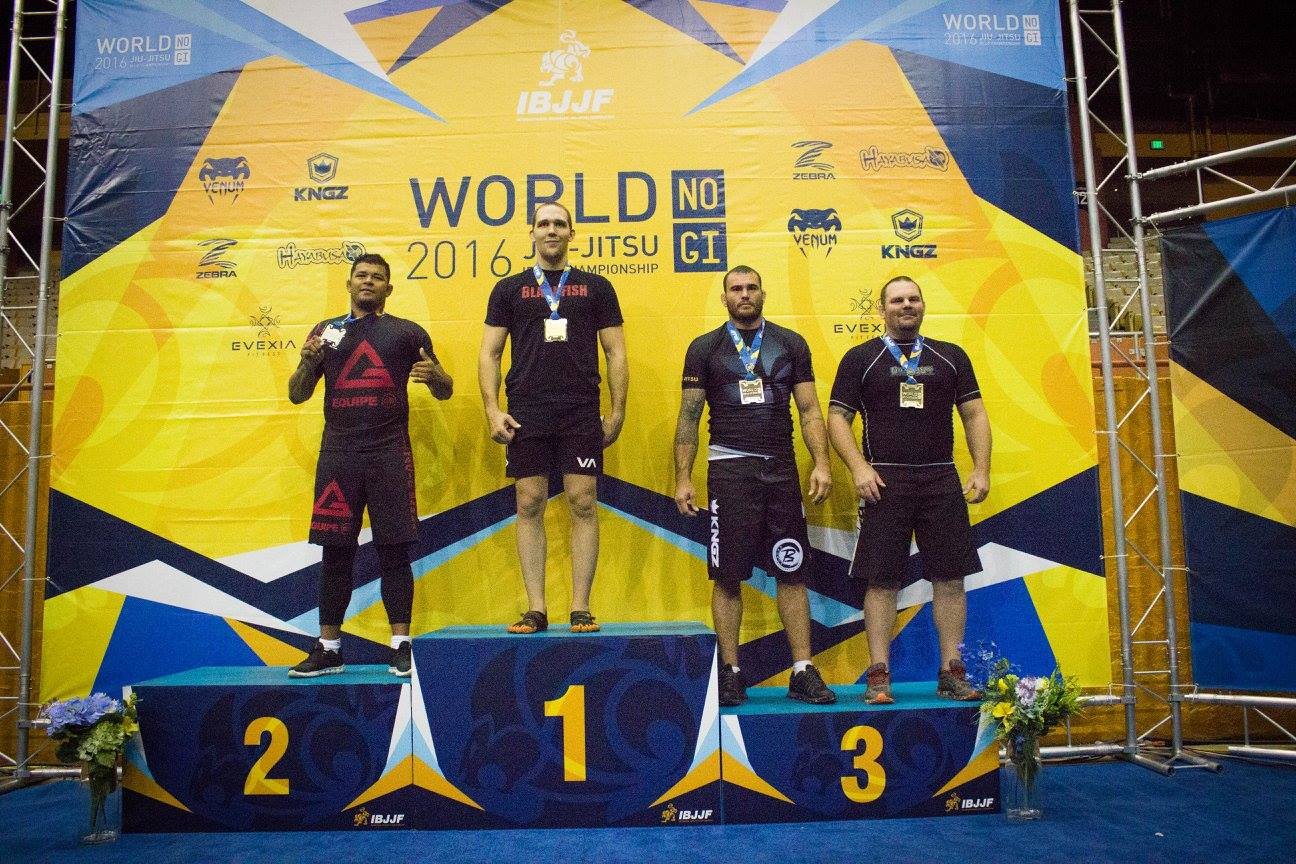
World No-GiThree-time black belt silver medalist
01 · The first lesson
The first loss became a reason to return.
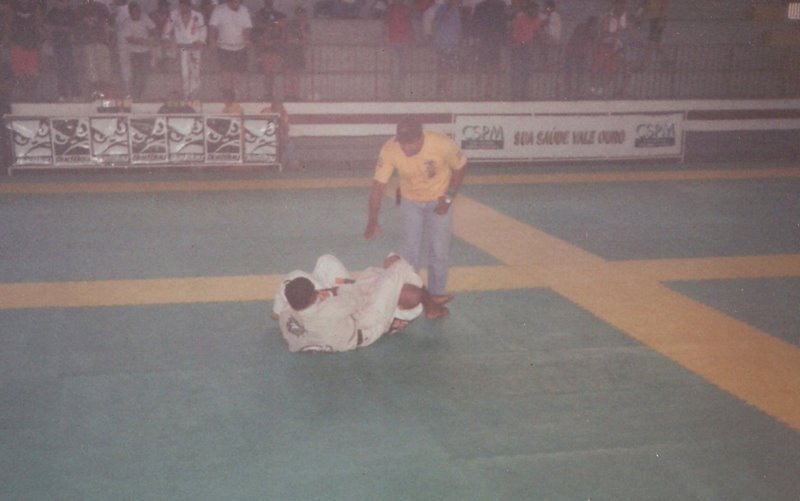
After beginning Jiu Jitsu in 1997, Thiago entered his first Amazonense in 1998. He spent four minutes underneath an opponent's sprawl and lost the match. On Monday, he returned to training determined to understand what had happened.
In 1999, he returned to the Amazonense and became champion as a white belt. After that competition, he received his green belt. The loss had given him a reason to seek knowledge, improve, and return better prepared. In the Jiu Jitsu community he grew up in, winning the Amazonense carried special meaning.
02 · Brasileiros (IBJJF/CBJJ)
A ticket to Rio changed the scale of the dream.
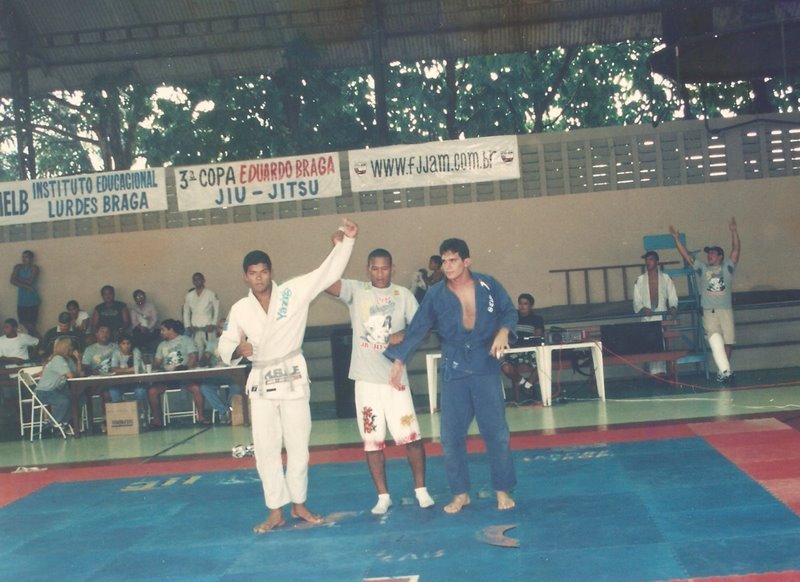
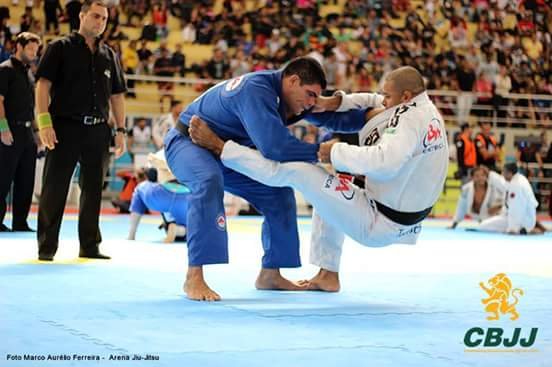
By 2001, Thiago was a blue belt. Winning his division and the absolute at a local event brought prizes he could not have afforded himself: a gi and a plane ticket to compete at the Brazilian Nationals (IBJJF/CBJJ) in Rio de Janeiro. A national stage that had seemed beyond his reach was suddenly possible.
When he came home that night, he could barely tell his mother he had won before he began to cry. They embraced and cried together. That moment marked the beginning of her support for his journey in Jiu Jitsu.
He returned to Manaus as Brazilian National Champion in the adult heavyweight blue belt division. The photograph beside this story is the only image he still has from that championship.
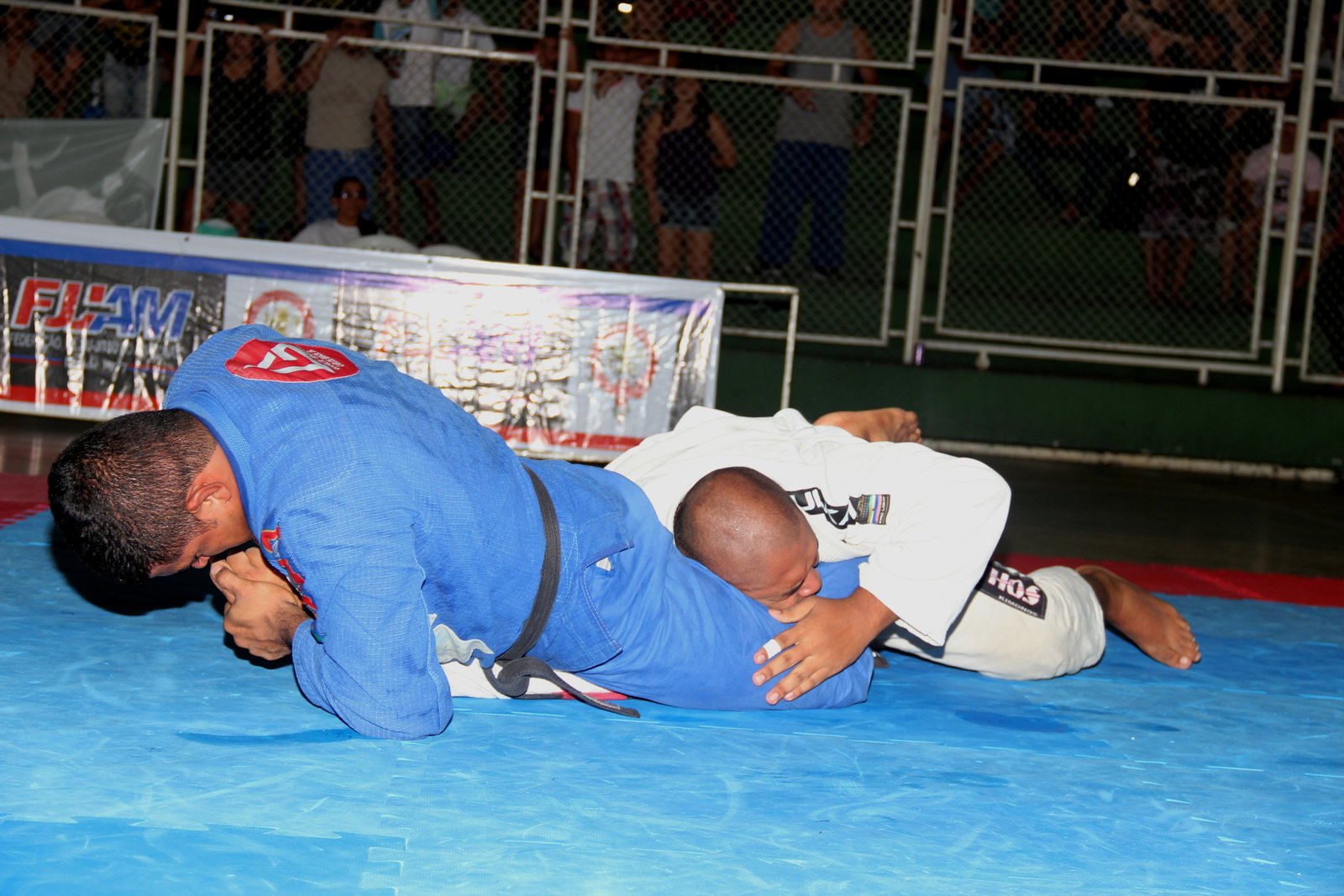
03 · Amazonense Championships · FJJAM
Where it began. Where every title mattered.
For Thiago, competing in Amazonas has always carried a special meaning. It was where he experienced his first defeat, returned to become a champion, and built the foundation of his competitive journey.
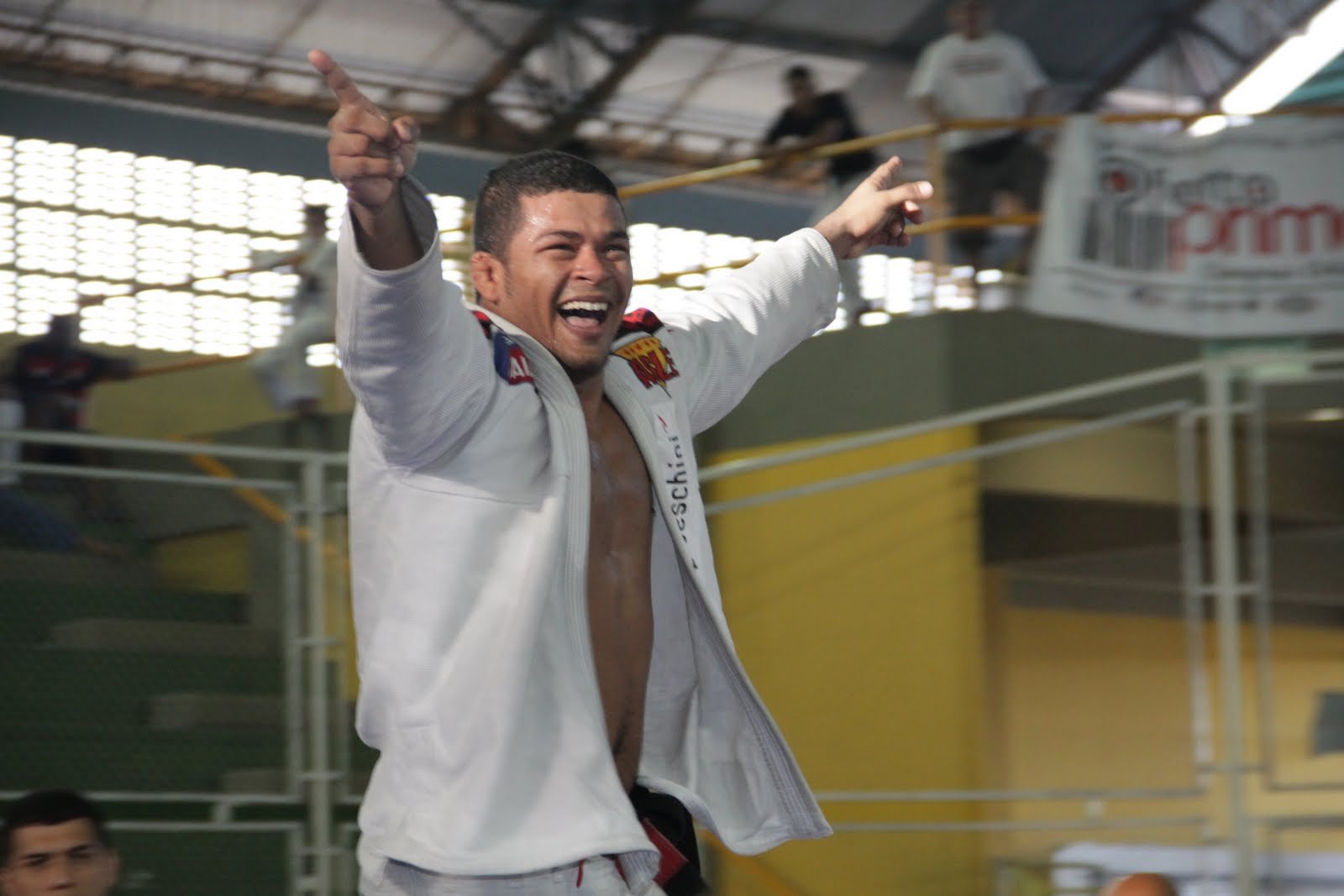
As a black belt, he won his weight division at seven consecutive FJJAM Amazonense Championships, from 2009 through 2015. During that period, he also earned six absolute titles, including the heavyweight absolute in 2013. Five of those absolute titles came in consecutive years, from 2009 through 2013.
Together, these thirteen titles hold a lasting place in his story. Their importance goes beyond the medal count. They represent years of preparation and growth in the place where his journey began.
- 7Consecutive weight-division titles
- 6Absolute titles
- 13Titles overall
04 · Selected results
Built across years, rulesets, and stages.
This is a selected record of defining results, not a complete list of every tournament. Each season represents the same commitment to preparation, adaptation, and honest feedback.
Black belt · Gi division
Master 1 · Black belt · Ultra-Heavy
Black belt · Gi division
Black belt · Gi absolute
Master 2 · Black belt · Gold in open class and bronze in Ultra-Heavy
Master 2 · Black belt · Gold in open class and silver in Ultra-Heavy
Black belt · Gi division and absolute
Black belt Master 3 · Ultra Heavy and open class · Gi
Black belt · No-Gi division
Bronze, silver, and bronze · Black belt
05 · Championship archive
Every season has its own story.
Three defining seasons, organized year by year. Each chapter brings together the competition, the result, and the moment that remained.
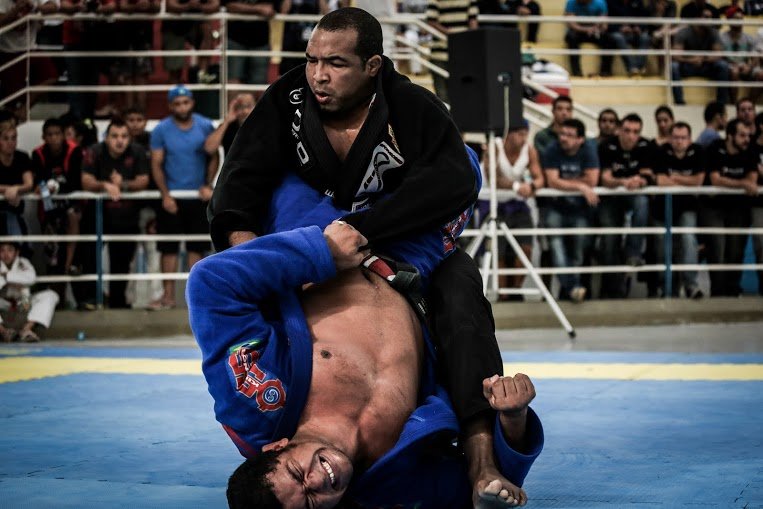
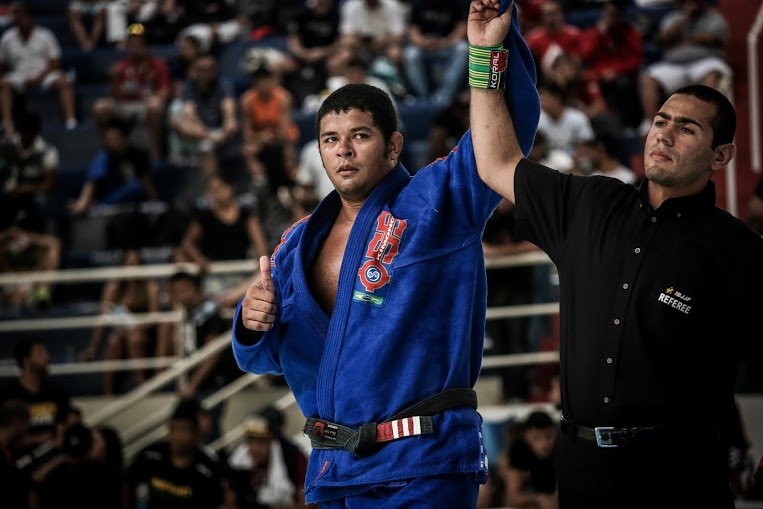
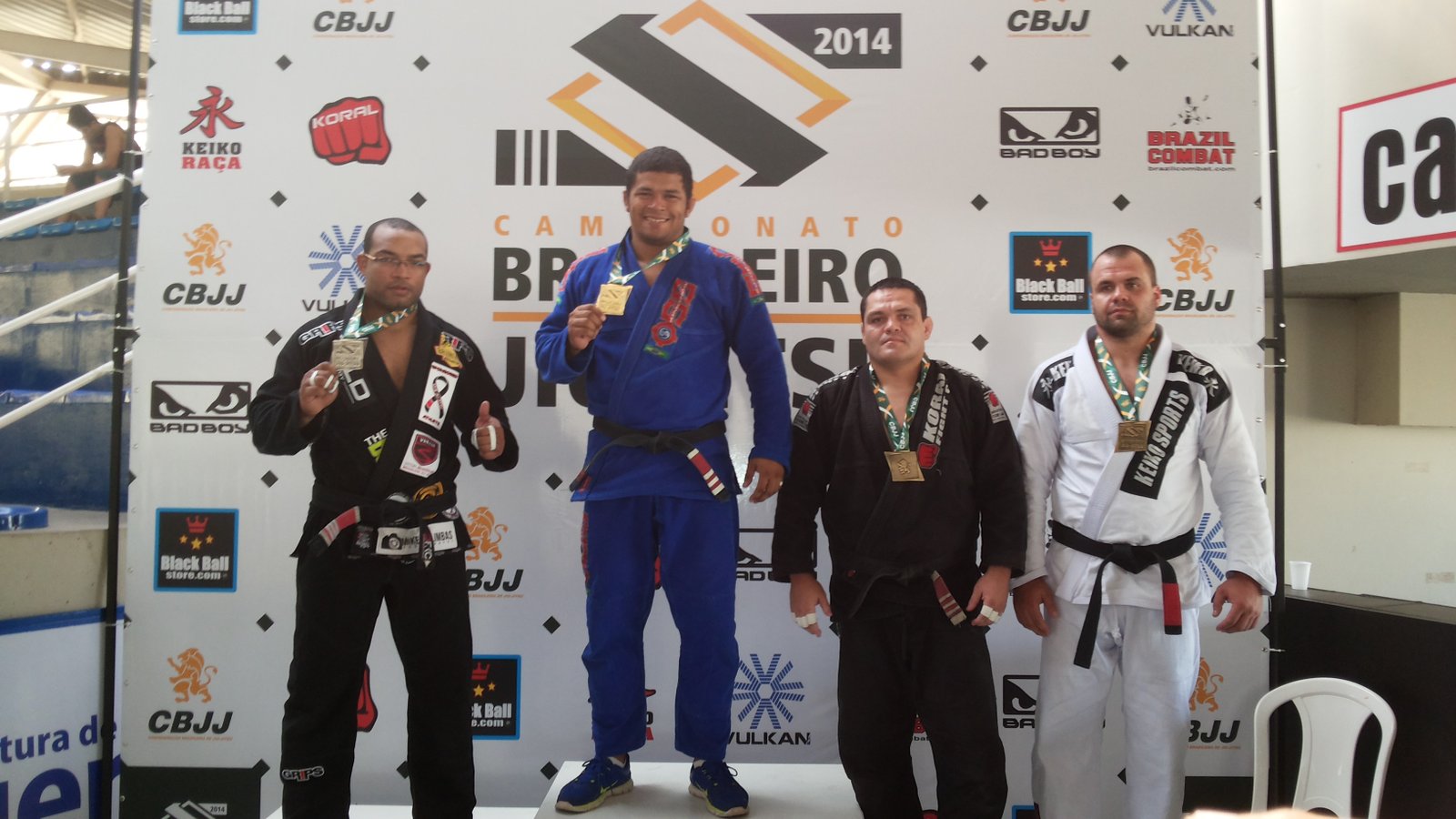
2014
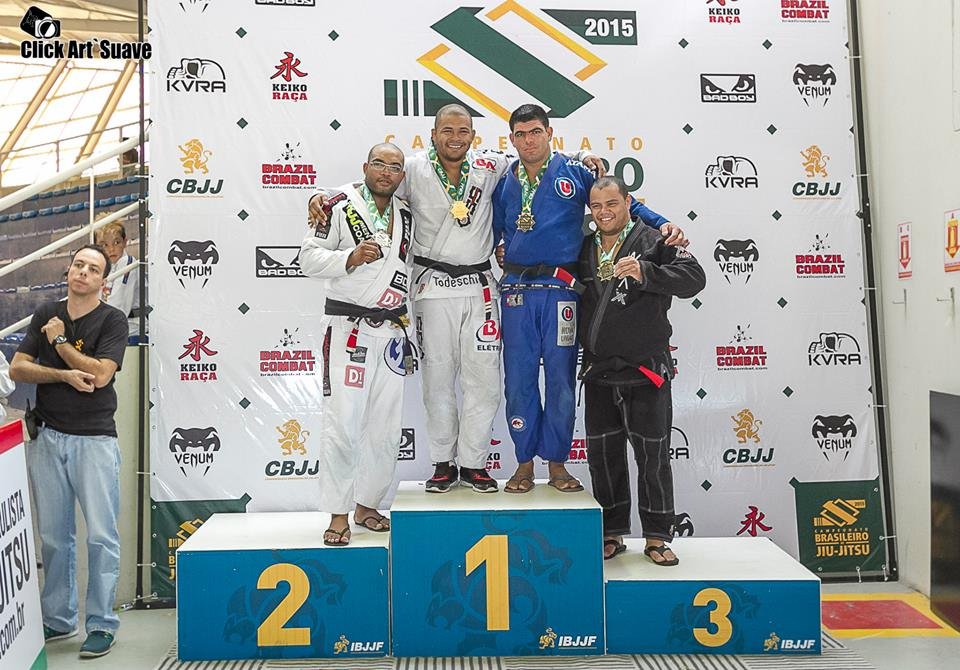
The first Brazilian National title as a black belt.
The Brazilian National title became a defining moment. Later that year, Thiago earned bronze in the Master 1 black belt Ultra-Heavy division at the IBJJF World No-Gi Championship.
2015
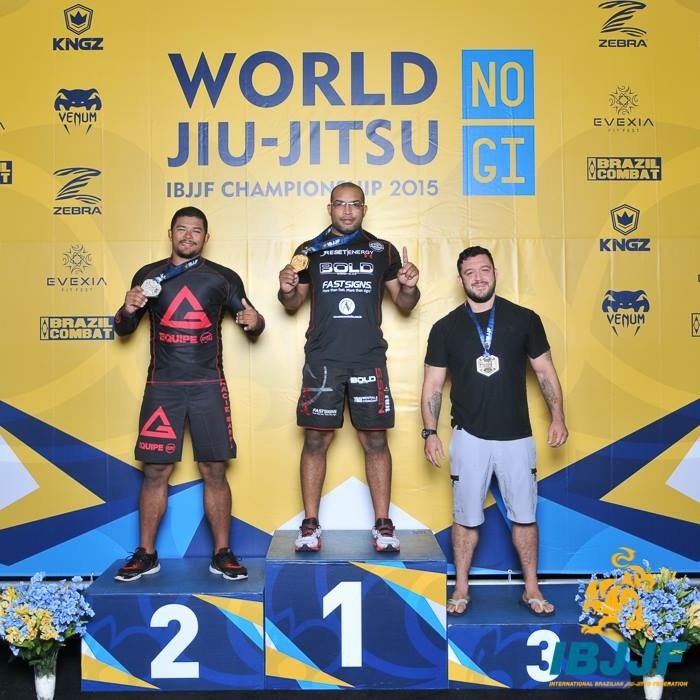
National success followed by a world medal.
A second Brazilian National title reinforced the work built in Manaus, followed by silver in the Master 1 black belt Ultra-Heavy division at the IBJJF World No-Gi Championship.
2016
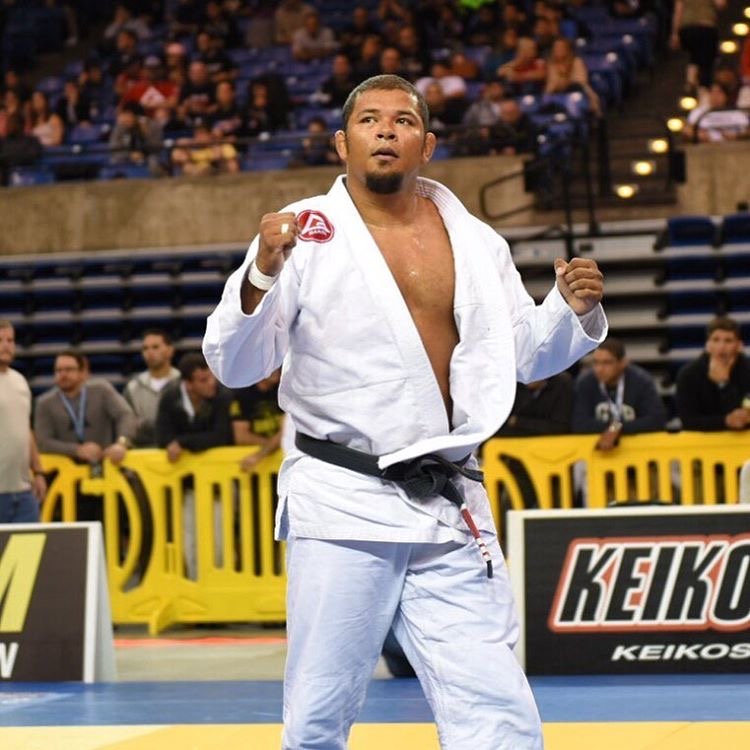
A breakthrough season on the international stage.
Thiago became IBJJF Pan American Champion and closed the season with another major result at the World No Gi Championship.
06 · The world stage
Preparation becomes visible under pressure.
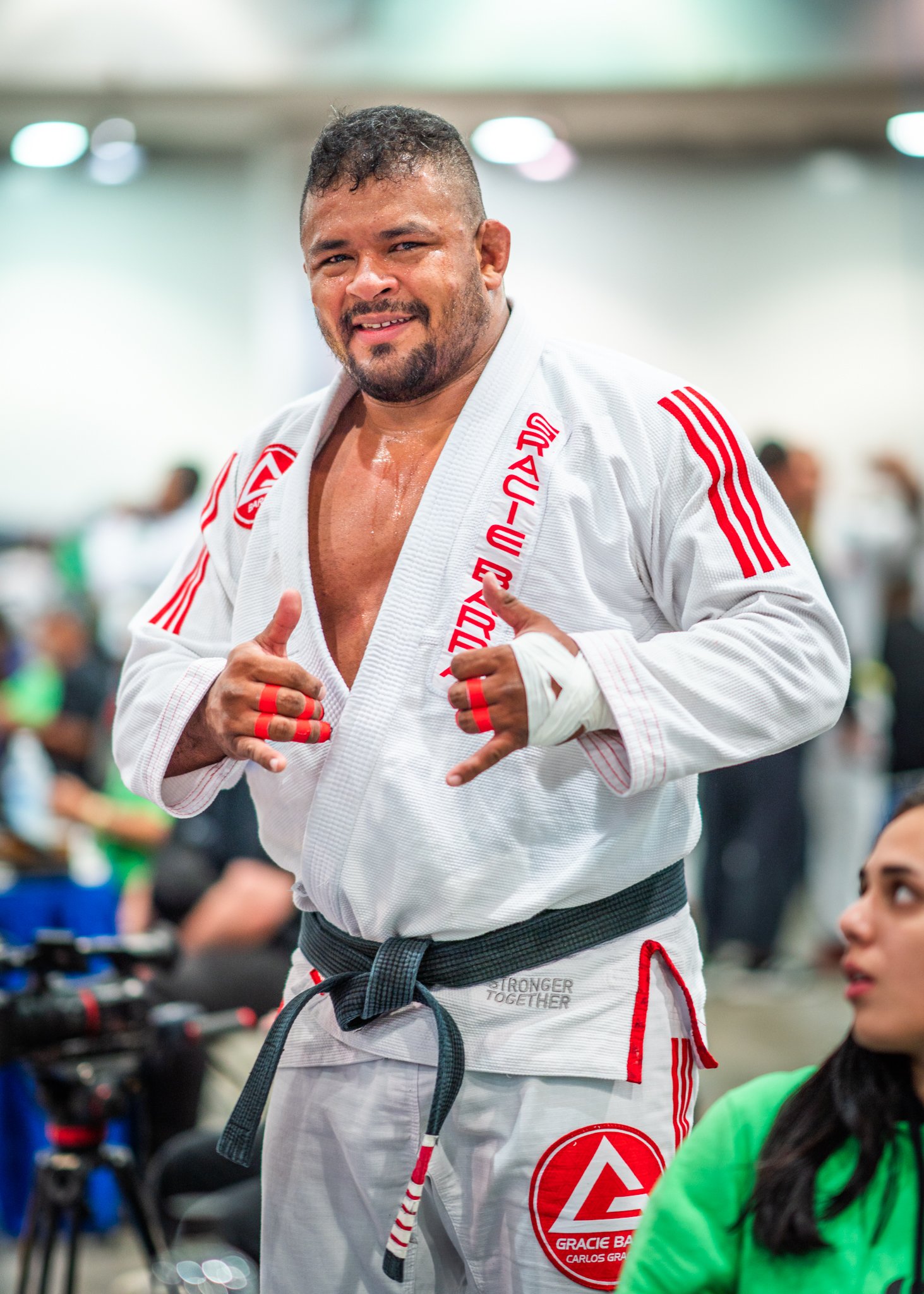
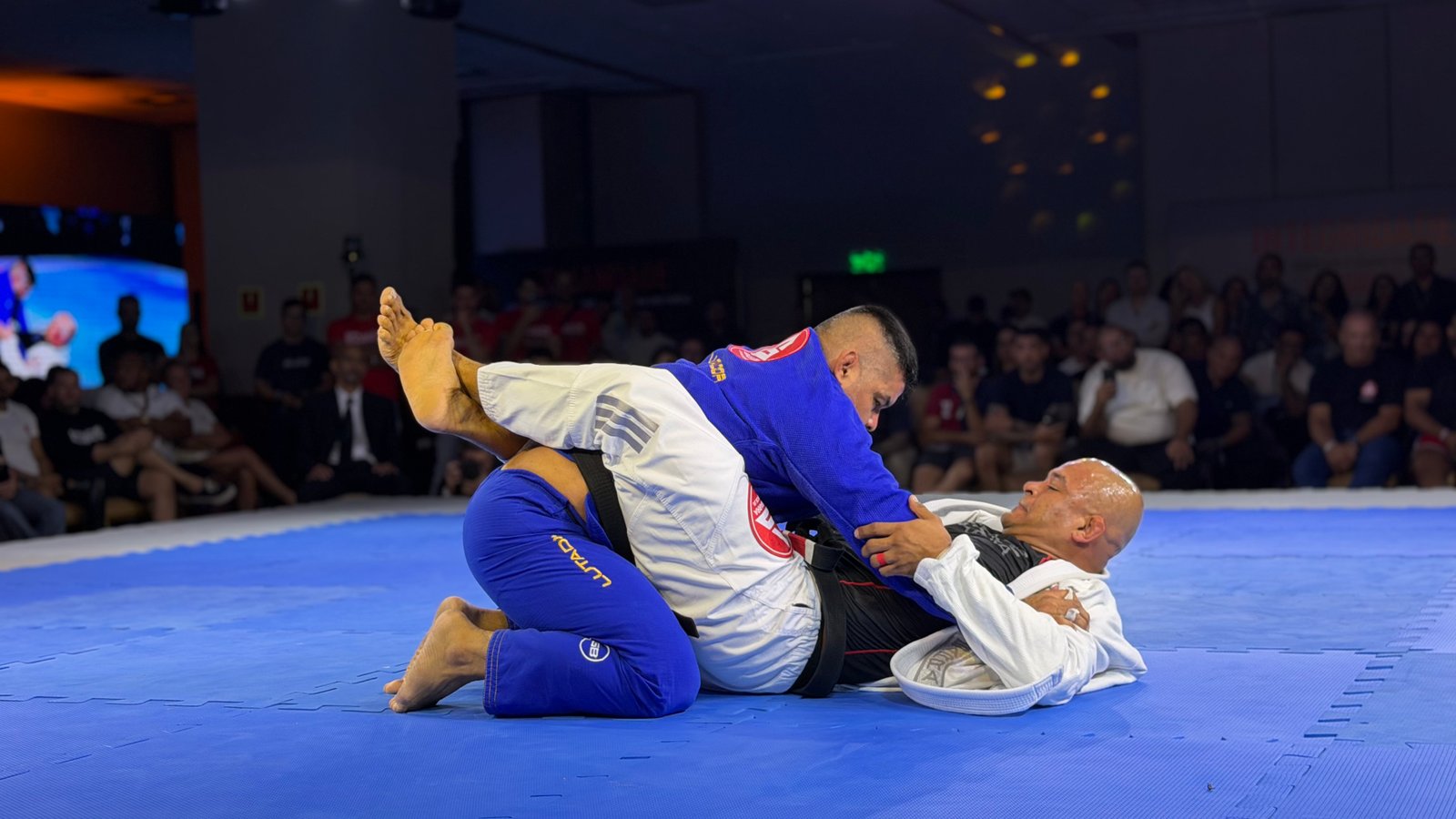
The world stage demands technical clarity, physical preparation, and emotional control. It also creates lessons that cannot be simulated in a normal training round.
Thiago brings those lessons back to his students. He teaches them how to manage the score, recognize momentum, make decisions while tired, and stay composed when a match becomes difficult.
 GB World Summit · 2026
07 · Competition and teaching
Experience tested. Knowledge shared.
Competing keeps Thiago connected to the same uncertainty his students face. The preparation, nerves, adjustments, and recovery all become part of the way he teaches.
“The medal is a result. The real value is returning to the academy with a clearer lesson for the next student.
Train with experience